Palermo Map
Site Index
Contact
Random
Our Travel Books
Advertising / Press

Follow Your Nose to Torrefazione Ideal

Grind Your Own Coffee

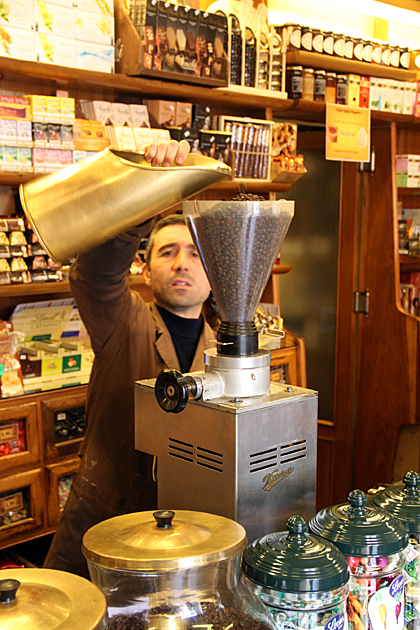
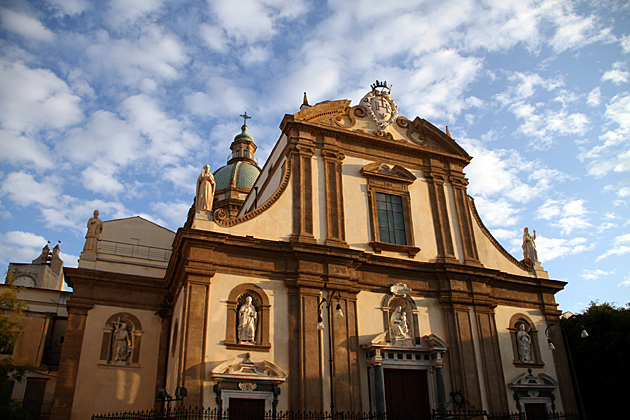
As we were leaving the Santa Caterina on Plaza Bellini, eyes still bruised by the church’s baroque extravagance, another of our senses came under attack. Like Micky Mouse following the scent of cake, we became captive to a strong whiff of coffee. Powerless to resist, we were carried to the doors of Torrefazione Ideal.
Grinding Coffee Sicily

In the few weeks we’ve lived in Palermo, we’ve made approximately sixteen thousand cups of espresso. A two-cup coffe-maker was among the very first purchases we made, and that thing has gotten used so hard that I almost feel bad for it. For some reason, a strong cup of espresso always sounds like a good idea, and we indulge ourselves over and over, without regard to basic common-sense or the frantic racing of our hearts.

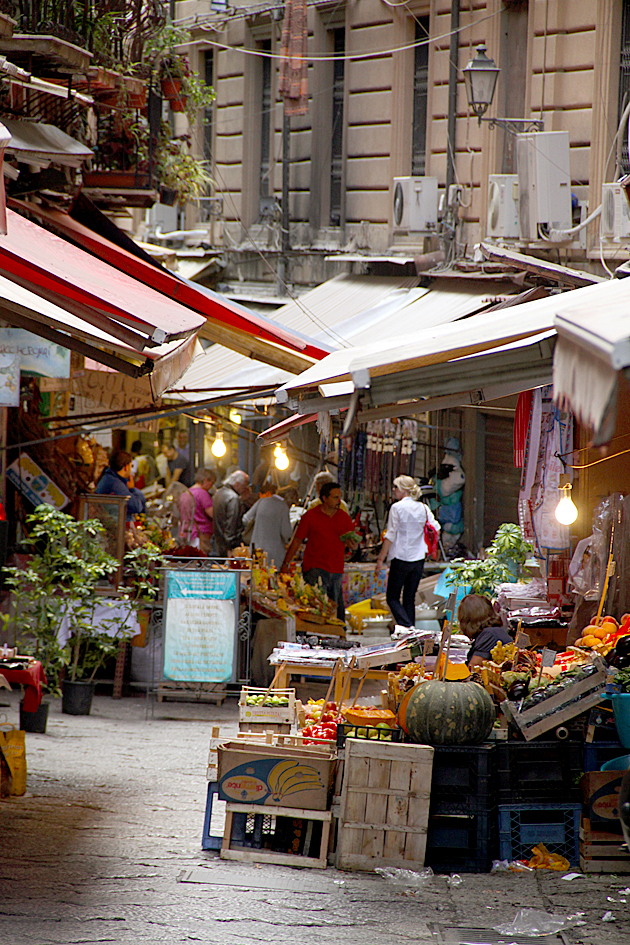
Torrefazione Ideal is where we usually go to stock up. I wasn’t exaggerating about how we discovered it; you can smell the coffee from thirty meters away and, the first time, we actually followed our noses to the entrance. Once inside, the smell is absolutely intoxicating, and the interior of the shop is beautiful as well, with huge roasting barrels in the back and a great variety of beans for sale up front. The prices aren’t bad either.

If you walk by Plaza Bellini, you won’t be able to avoid the scents of Torrefazione Ideal. Espresso is just another specialty the Italians have mastered. Between that, the pasta and the ice cream, my taste buds are going to be inconsolable when we leave Palermo. It’s going to be rough on the little guys.

Discesa dei Giudici 42, Palermo
Location on our Palermo Map
Get The World’s Finest Espresso

Torrefazione Palermo Sicily
Coffee Mill
Coffee Palermo Sicilia
Espresso Sizilien Palermo

, , , , , , , , , , ,
October 30, 2011 at 7:16 pm Comments (2)

Casa Professa

All Churches We Visited in Palermo and Sicily

Although it’s tucked into the maze-like alleys of the Albergheria, the Casa Professa (or the Chiesa del Gesù, as it’s more officially known) isn’t difficult to find. Just head towards that beautiful green and white tiled dome, visible over most of the neighborhood’s rooftops. One of southern Italy’s most spectacular Baroque churches awaits.

Casa Professa Italy

In 1549, the Jesuits arrived in Palermo and set up shop in the Albergheria, which had been the Jewish Quarter until their mass expulsion in 1492. The Catholic order soon began to construct their church, and spared no expense. When it was consecrated in 1636, the Casa Professa immediately assumed a rank as one of Sicily’s finest.

Exuberant patterns, bold artwork and colorful marble cover every inch of the interior. Sculptures, paintings and plastic decorations on the walls weave in and out of each other gorgeously. Nothing simple or understated, here; even the picture frames are ostentatious, and command as much attention as the paintings contained within.

And I don’t think I’ve ever seen so many cherubs in my life. There must be thousands of the little fellas in Casa Professa, hanging from the walls, hugging onto frames, carrying pitchforks and praying to their lord. The church’s decorative color scheme of crimson, gold, and dark blue, is carried over onto the floor, which is covered in swirling patterns. Above head, a gorgeous fresco shows the path from heaven to hell. With three naves and ten chapels, the church is enormous, and there is no shortage of beauty to gawk at.

Along with most of inner Palermo, the Casa Professa was nearly reduced to rubble during the Allied bombing of 1943. One of the bombs scored a direct hit on the church’s dome. Restoration required decades, and the church only re-opened in 2009. Some of the paintings are noticeably too bright and modern, but otherwise the work was flawless.

For fans of the Baroque, the Casa Professa provides an unforgettable experience. For us, it serves as a reminder of how ridiculous it is that, during Mass, a collection basket is passed around. “Razzle Dazzle! Whee-hee-hee, look how rich we are! Statues and carvings and golden everything! We need more razzle-dazzle in that corner, yes dazzle it up. More gold! WHEE-HEE-HEE [slobber]” (Oh, and please give generously to the church, my child. Or you’ll go to hell).

Location on our Palermo Map
-Everything You Need To Know About Baroque

Roof Palermo
Palermo Sicily Tour
Casa Professa Palermo Sicily
Palermo Blog
Organ palermo Sicily
Stained Glass
Photos Sicily
IHS
amazing painting
Free Masons
Most Amazing Picture Frame
Pretty Angel
Strong Angels
Art Angels
Chunky Angel
Angel Design
Angel on A Sheep
Angels in Palermo
Baroque Palermo Italy
Religion in Italy
Man Twig
Palermo History
, , , , , , , , , ,
October 29, 2011 at 6:59 pm Comments (0)

An Impromtu Tour of the Vucciria Market

Our Buenos Aires Travel Book

“Coriandolo?” The market seller was looking at me with a strange expression, and I thought maybe I was just pronouncing it wrong. “Cori-AN-dolo? Cilantro?”

Vucciria-Market

Apparently, cilantro isn’t an herb much used in Sicilian cooking. The stand in the Vucciria Market had piles of basil, sage and oregano, but the seller had never heard of cilantro. Still, he was determined to help me out, and asked if I would recognize it by sight. “I think so, probably”. Producing herb after herb from the back of his store, he held out branches for me to sniff and inspect.

“It’s really not so important”, I eventually said. “I can take basil instead”. He waved off this suggestion as utter nonsense. If it’s cilantro I wanted, he was going to get me cilantro. Taking me by the arm, we walked over to another stand, whose seller was a bit younger and knew some English. He understood what I wanted, but didn’t have any, either. The two consulted for awhile, then led me to a third store packed with spices. Again, no dice.

While three Italian market sellers were discussing and debating the existence of cilantro, I looked on dumbfounded. They must have decided that it was hopeless because the conversation had, at some point, switched to football. Walking back to the original stand with the owner, we settled on parsley as a substitute, and he apologized for his inability to locate cilantro. But I’d just had a personalized tour of the Vucciria Market and participated in a bit of Palermo street life! I couldn’t have been happier.

The next time I feel bored or lonely, I’m going return and ask for wasabi.


Sadly, the Vucciria Market has lately become a pale reflection of its former self. Guidebooks breathlessly describe Vucciria as the city’s most colorful and exciting market, but today there are just a handful of stands. With renovations being done on a lot of the neighborhood’s buildings, many of the vendors closed up shop, and no effort was made to retain them. The market is still worth walking through, but don’t expect the boisterous carnival atmosphere you’ve read about. Since it’s so close to our apartment, we’re there daily — you can still find everything you need for a great home-cooked meal. Everything except cilantro.

Location on our Palermo Map

Sword Fish Head
Fish Market Palermo
Palermo Man
Cow Head Bloddy
Butcher Palermo 11
Fresh Tomatoes
Italian Aubergine
Italian Broccoli
Italian Nuts
Italian Zucchuni
Oven Peppers
Red Chili
Peeled Potatoes
Parma Ham
Weird Fruits Sicily
Fennel
Dried Tomatoes Sicily

, , , , , , , , , , , ,
October 28, 2011 at 5:36 pm Comments (5)

Fill ‘Er Up at the Wine Station

Read About Italian Wines

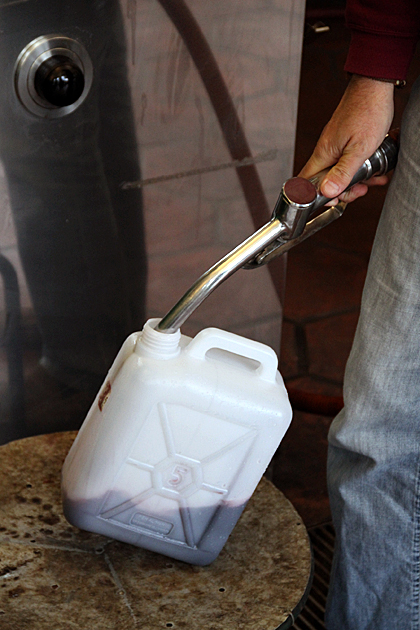
This might be common throughout Italy, but Palermo is the first time we’ve encountered a store that sells wine by the liter, as though it were gas. Pumped from a tank, through a nozzle into a large plastic container, with a ticker racking up the price, really as though it were gas. It’s even about the same price.

Wine Pump Station

As soon as I saw the metallic tank spurting out wine — or rather, as soon as my mind could wrap itself around what I was looking at, Vino & Co. became my favorite shop in the world. Red wine is a bit more expensive than white or rosé, but five liters (nearly seven bottles) still only runs about €7. It’s table wine that will never win any awards, or be praised as “smokey and full, with undercurrents of cinnamon and raspberry” by a bespectacled gentleman connoisseur. But it’s drinkable.

My guilt about drinking wine falls into two categories. (1) Spending so much money on such an unnecessary pleasure, and (b) spending so much time stumbling about buzzed. Vino & Co. takes care of Concern #1, but might exacerbate #2.

So is this strictly a Sicilian thing? Or do these wonderful shops exist all over Italy?

Location on our Palermo Map

-Buy Wines From Argentina Here

Wine Pump
Vino Bianco Sicily
, , , , , , , ,
October 26, 2011 at 5:24 pm Comments (5)

Palermo – Not just a Cruise Ship Destination

Book your Hotels in Sicily here

Tourist Hello

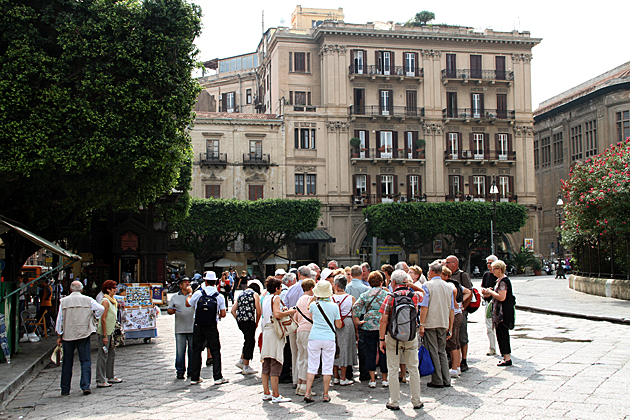
Almost every day, it seems like another massive cruise ship docks at Palermo’s port, and thousands upon thousands of tourists pour out like molten lava. With only a few hours to see everything Palermo has to offer, they’ll hop on the big double-decker sightseeing buses which cruise around the historic center. Maybe they’ll have a chance to visit the Norman Palace or the Catacombs, but before long it’s right back onto the ship. I wonder how many of them are captivated by the city’s charm, and promise themselves to return.

Nothing against cruise-shippers, of course, we’ve been there ourselves. But in such a short time, it’s almost impossible to soak in the little details which make Palermo such a special place, such as those revealed in our latest random picture post:

Rainy Trees
Market Left Overs
Market Vehicle
Off The Hook
Boxed In
Fruits
Granat Apfel
Bottle Art
Italian Flowers
Palermo Secrets
Flower Wall
Singing Statue
Wing Lady
Spiral Stairs
Stuffed Animals
Round Tower
Puppet Theater Sign
Senso Unico
Restauration Palermo Sicily
Antiques Palermo
Palermo Sicily Blog
Term Renting Palermo Sicily
Electricity Palermo
Lady In Red
Balcony Garden
Holy Palermo
Plaza Marina
Late Night Snack Italy
, , , , , ,
October 26, 2011 at 12:14 pm Comments (0)

Ice Cream in a Bun

Everything You Need To Know About Italian Ice Cream

The first time I saw someone walking down the street in Palermo, eating ice cream in a bun, I thought, “What a weirdo”.

The second time I saw it, I thought, “Is that some sort of crazy Sicilian specialty?”

The third time I saw it, I thought, “That looks delicious”.

And the fourth time I saw someone eating ice cream in a bun, it was because I spotted my own blissful reflection in a storefront window.

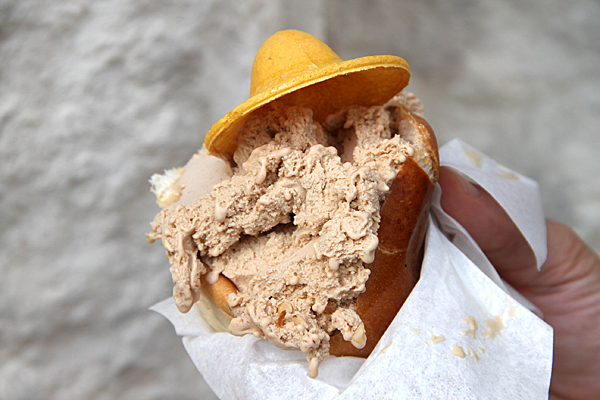
Ice Cream Bun

So, yes, ice cream in a bun (or more exactly, a brioche) is a popular snack in Palermo. The sweet bread is cut open and a mound of ice cream plopped inside. It’s more difficult to eat than from a cone: the ice cream melts faster, and dainty licks aren’t nearly as effective as full-mouthed bites. But I’ve always been a fast ice-cream eater, devouring entire cones in the time it takes Jürgen to finish putting colorful candy sprinkles on his, so I’ve got no problem with it.

In fact, I think I prefer my ice cream in a bun. The brioche tastes incredible with the ice cream, chewier and fuller than a cone. It’s surprising that the tradition hasn’t made its way to other countries; this is the first time we’ve seen it. So before we leave Sicily, I’ll have to make sure to get my fill of ice-cream-buns. Yes, I’ll have to do that, it’s only sensible.

- Our post about Ice Cream in Buenos Aires

Ice Cream Palermo Sicily
Palermo Ice Cream
Learn 2 Tango
, , , , ,
October 25, 2011 at 5:08 pm Comments (7)

The Torre di San Nicolò

Receive our articles straight into your inbox!

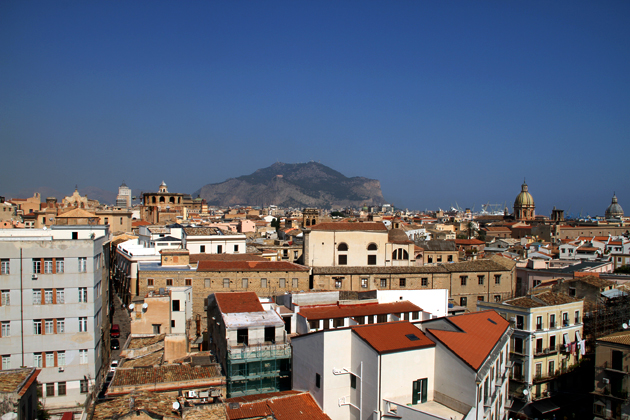
One of the best birds-eye views of Palermo can be had from the top of the Torre di San Nicolò, near the Ballarò market in the Albergheria. The late-Gothic tower was constructed in the 13th century for defensive purposes, and now belongs to the adjoining San Nicolò church. For a structure built so long ago, the tower is in remarkable condition, and for a great panorama of the medieval city, you can’t do better.

Location on our Palermo Map
- Mafia Games

Palermo 2011
Casa Professa
Palermo Blog
Weird Massimo
Chaos in Palermo
Visit Palermo
Tiles Palermo
Palermo Roofs
Italian Tank Top
Palermo Italy
Bell Of Palermo

, , , , , , , ,
October 24, 2011 at 6:41 pm Comments (0)

The Flag of Sicily

Buy The Sicily Flag Here

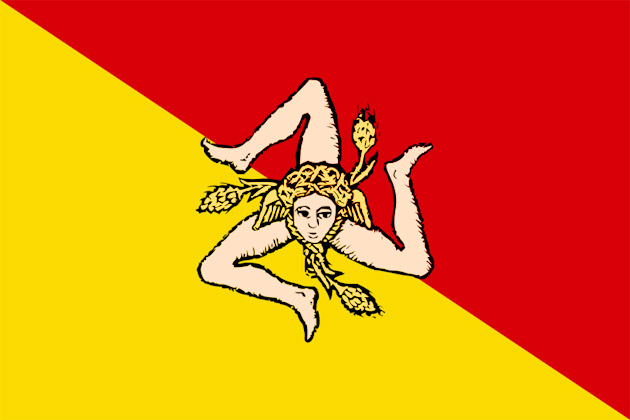
What do Medusa, heads of wheat and human legs all have in common? Surely not more than this one thing: they all appear on the flag of Sicily, which must be one of the strangest flags in the world.

Flag Sicily 11

The three-legged symbol is known as the trinacria, and has represented the island since the Sicilian Vespers: the successful 1282 revolt against French King Charles I. The three legs represent Sicily’s extreme points, Capo Peloro (northeast), Capo Passero (south) and Capo Lilibeo (west), and the triangular shape of the island is reflected in the pattern.

Medusa’s head is frequently used as a symbol to ward off evil. With wings sprouting from her ears, snakes for hair, and that famous knack for turning people into stone, her appearance on the flag is probably meant to warn away any future conquerors from poor, war-prone Sicily. The heads of wheat are a symbol of fertility, paying tribute to the island’s famously rich soil. And the colors of the flag, red and yellow, represent Palermo and Corleone respectively: the towns in which the rebellion of the Vespers began.

The three bent legs are the real oddity, but stranger still is the fact they appear on the flag of another territory: the Isle of Man. Thought to represent the concepts of progress and competition, this symbol was in use by both the ancient Greeks and Celts. The conjoined legs have a long history, appearing on Greek coins found near Syracuse, as far back as 300 BC.

- Books about Sicilian History


, , , ,
October 23, 2011 at 4:40 pm Comments (0)

San Francesco d’Assisi

Nearby: The Oratory of San Lorenzo

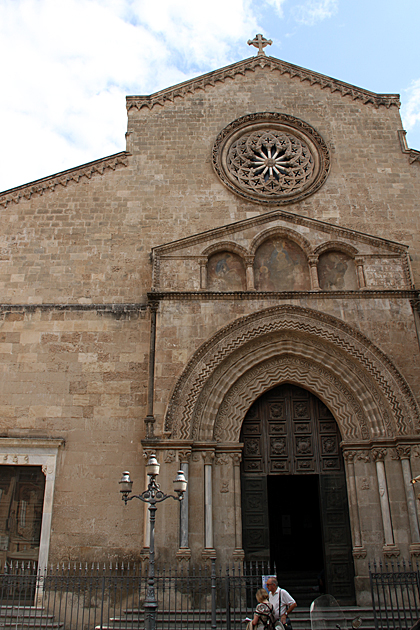
Tucked into a small plaza just south of the Corso Vittoro Emanuele, is the church of San Francesco d’Assisi. Originally built in 1260, the church has undergone many transformations in its 750 years of life, and still plays an important role in Palermo’s religious life.

San Francesco d'Assisi

With an unusual zig-zag pattern, the gorgeous portal of the church demands attention, as does the complex rose window above it. The facade was rebuilt in the 20th century, according to the original Gothic designs, after the church was damaged by the 1943 Allied bombing which devastated Palermo. The interior of the church, which blends Romanesque, Gothic and Neoclassical design, is less showy than many others around Palermo, but no less beautiful. The wooden ceiling, works of art and detailed stucco carvings are gorgeous.

The San Francsco is home to Palermo’s idol of the Immaculate Conception, and so plays an important role during the celebrations of the Immaccolata on December 8th. The church is the center of celebrations, and the starting point for the somber procession carrying the idol to the Cathedral.

Location on our Palermo Map
- Learn Italian

Rosen Window
Old Painting
Wedding Palermo
Wooden Ceiling
Middle Ages Sicily
Assisi Palermo
Floating Jesus
Travel Photography
Italy Travel Guide
Beauty Of Italy
Holy Palermo
Hooded Lady
Thinking About God
You Got The Look
Ho Sete
Sicilian History Books
, , , , , , , , , ,
October 19, 2011 at 8:16 am Comments (6)

A Concise History of Palermo

Palermo History Books

Separating Northern Africa and Europe, and providing passage between the Orient and the West, the Mediterranean Sea has always been one of human history’s focal points. Sicily is set in the middle of the sea and, as you might expect, its capital city has seen a fair share of drama throughout the centuries.

History Of Palermo

Palermo has been passed around like a hot potato from one grand civilization to another, with eighteen different rulers, by my count. Here’s a guide, as succinct as possible, to the tumultuous history of this ancient city.

8000 BC The first evidence of human activity in Palermo is cave drawings by an extinct tribe known as the Sicani.
734 BC The Phoenicians establish the city, naming it “Ziz”, and later pass it onto their successors, the Carthaginians. Palermo quickly becomes an important point of commerce.
276 BC Following the Pyrrhic War, Palermo passes to the Greeks, who call it Panormus, meaning “all-port”.
246 BC After just three decades of Greek rule, the Romans take over. Palermo becomes an important trade center for Rome, and Christianity is introduced during their rule.
440 AD As the Roman Empire is collapsing, King Genseric and the Vandals take possession of Palermo, but are unable to hold it for long: another Germanic tribe, the Ostrogoths, soon usurp them.
536 During the Gothic War, the Byzantine Empire takes over Palermo, and manage to hold onto power for almost 400 years.
904 Palermo enters a golden age after being conquered by the Moors. The capital of the Emirate of Sicily was an important center of learning, and became the 2nd largest European city (behind Cordoba).
1072 Under Roger II and the Normans, Christianity returns to Palermo. The Palazzo Normanni is established in Palermo during the Normans’ reign, along with the Cathedral. The Kingdom of Sicily is equaled in power only by the Kingdom of England, also a Norman possession.
1194 The Holy Roman Empire takes over, but eventually cedes control to the powerful House of Anjou (1266), who can only hold onto Palermo for sixteen years. In 1282, the House of Aragon ascends to power.
1479 A great number of Palermo’s finest buildings are constructed during the rule of the Spanish Kingdom, who owned Sicily until 1713. Following Spanish rule, the city was run for short periods by the House of Savoy and Austria.
1734 The period of the House of Bourbon is marked by strife and warfare, with the populace staging insurrections against the unpopular French rulers.
1861 Led by Giuseppe Garibaldi, Palermo frees itself from the French and becomes a part of the Kingdom of Italy, which is where it’s stayed ever since.

-Tribunal des las Aquas in Valencia, Spain

Related Posts Plugin for WordPress, Blogger...
, , , , , , , , ,
October 17, 2011 at 8:48 am Comment (1)

« Older Posts