Palermo Map
Site Index
Contact
Random
Our Travel Books
Advertising / Press

A Day on Mt. Etna

Everything You Need To Know About Volcanoes

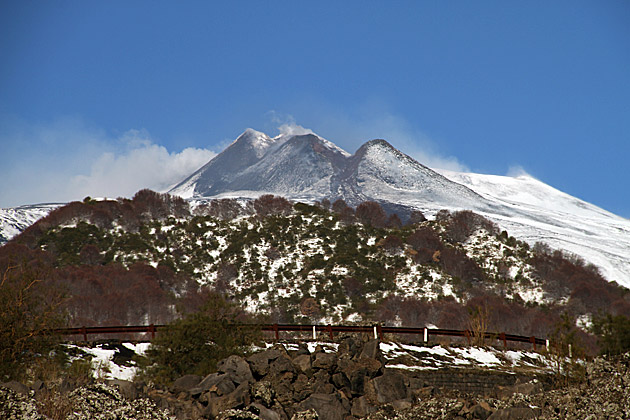
The eastern coast of Sicily is defined by the looming presence of Mount Etna, the largest and most active volcano in Europe. Though it had just erupted spectacularly a few days prior, we couldn’t resist checking it out during our final road trip on the island.
Etna Smoke

According to guidebooks and acquaintances, an ascent of Mt. Etna is one of the most exciting things you can do in Sicily. After having stayed the night in nearby Viagrande, we woke up early and drove up the southern face of the mountain. The wintry Sunday morning was crisp and clear, and we were the only people on the road. Midway through the 40-minute drive to Refugio Sapienza, which is the base for excursions, we stopped to admire the view over Catania and the Ionian Sea. “I can’t believe our luck”, I said to Juergen, while stretching and taking a deep breath of freezing mountain air. “This day couldn’t be any more perfect”.

Lost Cloud

Of course, such luck couldn’t last. As we were about to get back on the road, we saw a car winding up towards us. And then fourteen more immediately behind it. When we finally rejoined the road, we had become a tiny piece of a massive caravan on its way to the refuge. The change from peaceful solitude to crowded chaos had come so suddenly, that I almost suspected an island-wide conspiracy against us. “Lure them into a sense of tranquility… and then spring our trap!”

By the time we reached the Refugio Sapienza, thousands of other people had already arrived. We hardly found a place to park. And, looking up at the immobile cable cars, we realized that our day on Etna was about to suffer a sad, truncated end. The skies were clear, but the wind extreme, and cable car service had been suspended, meaning that the upper craters (and everything of interest) were inaccessible.

Nobody else seemed to care. They had not come to climb Etna, but to make snowmen, sled and have snowball fights. We were, apparently, the only ones not having any fun. The only suckers. We walked around the small crater that borders the refuge, went to the bathroom, and then called it a day.

Location on our Sicily Map
-Hiking in Asturias

Lava Bubbles
Etna Secret
Snow Etna
Hiking Etna
Small Crater Silvestre
Bulkan Baby

, , , , , , , , , ,
January 11, 2012 at 4:33 pm Comments (0)

The Zingaro Natural Reserve

Hiking in Sicily

Hidden coves. Crystal clear water. Prehistoric caves. Utter solitude. If all that sounds good after the noise and muck of Palermo, hop in a car and head out to Sicily’s first national park: the Riserve Naturale dello Zingaro.

Amazing Sicily

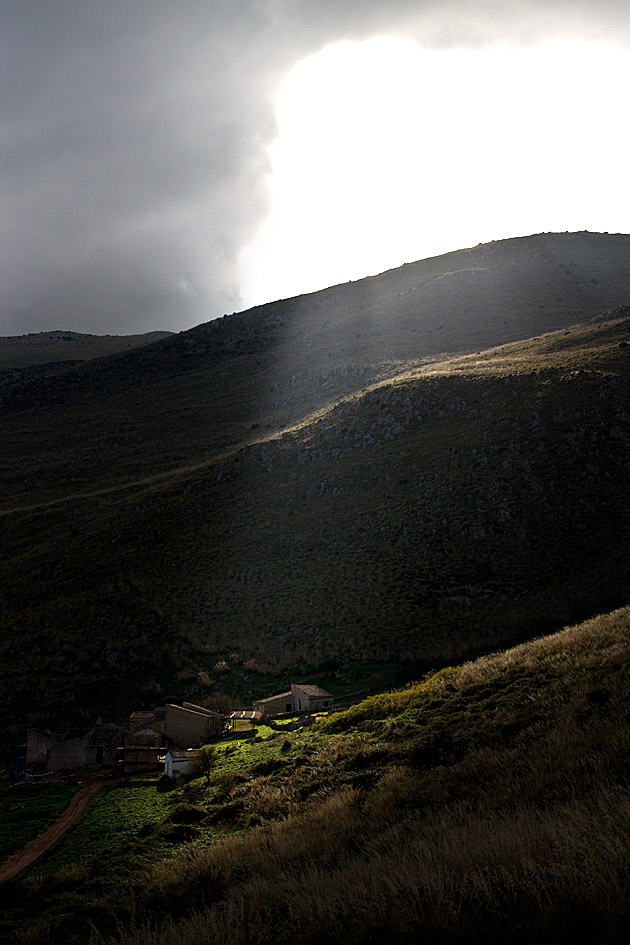
Alright, the “utter solitude” only applies during the winter when tourism is at a minimum. But on the sunny December weekday when we visited the park, there wasn’t a soul to be found, save some workers repairing the paths. Zingaro is on the Gulf of Castellomare, an hour’s drive from Palermo on the road to Trapani, and extends for seven kilometers up the coast. A number of different hiking trails connect the northern and southern entrances of the park.

Upon arriving, we set off on the coastal trail, passing by a number of secluded bathing areas. They were quiet now, but can fill up uncomfortably in summer. Most people, though, choose to remain at the first or second beach and, even in high season, a lonely spot can be found by continuing along the well-marked path. The water here is amazing: Zingaro lays claim to one of the few stretches of Sicilian coastline absolutely devoid of industry.

Zingaro was formed in 1980 after a planned highway along the coast sparked citizen outrage and concern about the region’s rich floral and animal life. Over 760 species of plants can be found in the park, some of them endemic to Zingaro. The fauna is rich, too, with eagles and falcons among the birds, and mammals such foxes and porcupines. We didn’t spot anything but a rabbit, though we did find a porcupine needle. It counts.

On the way back, we took the high road through the mountains. Arduous, but worth the effort for the amazing views over the gulf. Close to the summit, we found the Caves of Peppe Siino, which you can walk into. High up on the hill with a commanding outlook, I imagined that this was the home of VIP cavemen, such as noble Ooka Graak of Toomba-ooga and his wife, the fair Bleegha Utt. I kicked around the cave, mentally recreating scenes of domestic caveman bliss… “Ooka hungry!”, “Bleegha no care”, “Ooka STOMP!”… until deciding to hide behind a wall and spring out, screeching like a vampire, on poor unsuspecting Jürgen. Yep, caves are fun.

Anyway, the path progressed slowly back towards the entrance, up and around the hills. It was exhausting, and I can’t imagine doing it in the summer, when the sun must be unbearable. We were dead tired by the time we left Zingaro, seven hours after having begun. But it was an incredible day, the only time we’ve felt completely alone since arriving in Sicily, and we both felt refreshed enough to head back into the stressful city.

Location of Zingaro (South Entrance) on our Sicily Map
-Book Your Sicily Hotel Here

Zingaro Entrance
Zingaro Protest
Landscape Zingaro
Hiking Sicily
Dream Vacation Sicily
Dream Hike
Plant in a Hole
Orchards Sicily
Nature Close Up
Porcupine Needle
The Greens of Sicily
Cala Disa
Cacti Sicily
Rocks Sicily
Secret Beaches
Beach Zingaro
Beautiful Beach Sicily
Claer Water of Sicily
Sicilian Sea
Stoned Beach
Sicilian Stone Roof
Zingaro Hike
Zingaro Mountains
Caves Zingaro
Peppe Siino
Sicily Blog
Singaro Sicily

, , , , , , , , , , , ,
December 21, 2011 at 7:25 pm Comments (6)

Qanat – A Nighttime Tour of Palermo’s Ancient Canals

Hikes and Walk in Sicily

The Arab rule of Palermo lasted little more than a century, but constituted a true golden age for the city. Gardens and glorious buildings sprouted up, and Palermo replaced Syracuse as the island’s capital. It became the second largest city in Europe, renowned across the continent as a center of learning and for its privileged way of life. Among the many improvements introduced by the Moors was a system of underground canals, or Qanat, that provided the whole city with fresh water from natural springs in the Monreale area.

Canat Palermo

The canals were forgotten underneath the city for centuries, only rediscovered in 1979, while the groundwork for a new building was being done. They were preserved and, today, you can take a short tour through the water with the group Cooperativa Solidarietà.

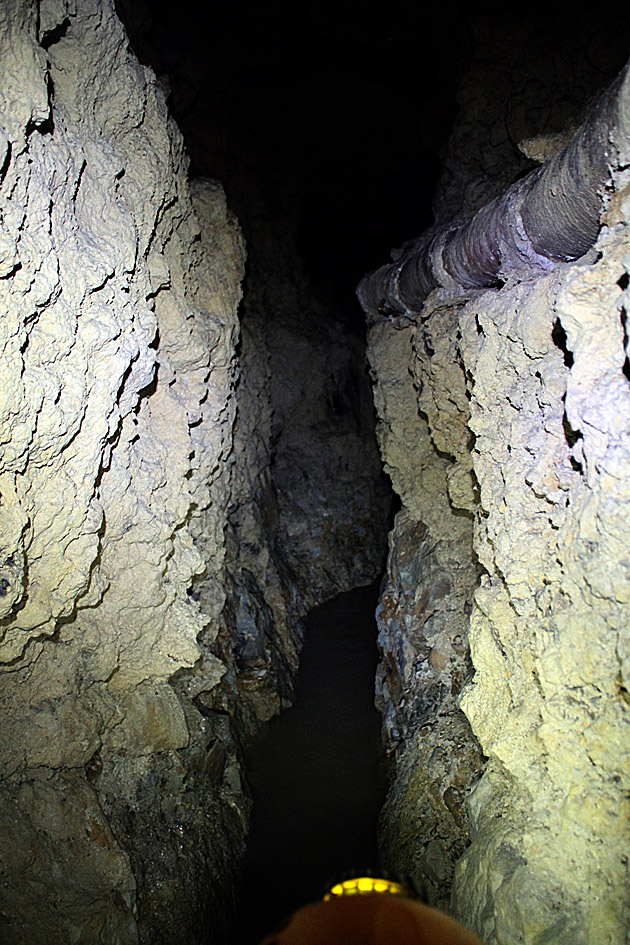
The tour starts with a descent of twenty meters, down a ladder into the darkness. We went on a rainy evening, when the water flowing through the canals was at its strongest. Our group of about fifteen marched single-file through the current, getting soaked, ducking under low ceilings and squeezing past narrow passages. The limestone walls had been worn smooth over the course of the centuries and the water flowing underfoot looked clean enough to drink.

We were underground for about an hour. Though the tour was no longer than half a kilometer, the water and low ceilings made for slow going. At one point, we had to climb through a hole in the ground, to a lower level. It was kind of like spelunking, but in man-made caves, and I found it hard to imagine that people were down here, digging out these tunnels, way back in the 10th century.

You’ll want to bring a full change of clothes. We were completely soaked by the end of the tour. They provided knee-high rubber boots, but these were no match for the knee-high water. It would also help to know some Italian; we understood very little of what the guide was saying. But if you’re looking for an interesting adventure or want to see a little-known side of Palermo’s history, definitely make the effort to join one of the tours.

Sottosopra Turismo Qanat (Cooperativa Sociale Solidarietà) – Website
- Our Visit to the Silver Mines in Potosí

Undergrounder
Palermo Secrets
Extreme Travel Blogger
Under  Ground Shell
Related Posts Plugin for WordPress, Blogger...
, , , , , , ,
November 21, 2011 at 1:43 pm Comments (0)